Essay discussion


Essay discussion:
Hand in draft over break.

-       New essay question.

New technologies –

‘How do new technologies enhance your understanding of graphic design and how do they relate to your own contemporary practice?’

Could start by brainstorming title.

Enhance – greater, value, beauty or effectiveness.

Graphic design – ad, poster, film graphics, corporate identity, logo design, web page design, packaging.

What does graphic design mean to me.

How are images produced –ideas vs. technical production.

What bits of graphics am I in to?

Bits and bobs.
Artists own work – not commercially published work.
Sketches, mixed media.

What does graphic design mean?

To attract an audience.
Experimental with typography/

‘Sustainable in design.’
‘Software used.’
‘Mixed materials.’

Deconstruct the essay question. All the range that there is. Highlight bits I’m interested in.

Thinking about audience?

Who is looking at the images, who are the audience, why are they looking at it.


What new technologies?

(Could be old technology – how its has impact in graphic design).

-New technologies allow new sorts of ways of working, that haven’t been possible before.
-       It’s possible now.
-       Through what medium are the audience assessing graphic design? E.g. magazines, prints.
-       How has desktop computing changed graphic design? E.g. digital photography.
-       Mass production of images e.g. Pop art, Flickr, the web, images across the web.
-       Photoshop/Illustrator or easier – for the independent to set up professionally, technologies drive careers forward.
-       Copy and paste e.g. montage of images.
-       How the Internet has changed graphic design.
-       Web 2.0 technologies changed graphic design?
-       Mobile computing (smart phones/tablets).

What makes you different. The ideas behind design work and the understanding an audience is what makes you different. Relate is back to you own design.

Timetable.

Week 1 – 24th Jan.
Week 2 – 31st Jan.

Time in Library accessing and researching key texts – Internet research.
Choose an area to focus on for your own essay.

Week 3 – 7th Feb.
Week 4 – 14th Feb.

Draft presentation due. Presentation and essay.

Week 5 – reading week.

Submit draft by e-mail.
(Should be half way through essay by then).

Week 6 – 1st March.

Presentation.

Week 7 – 8th March.

Essay due in.

Intro 300 words.

Looking at graphic design (add what new technology I am looking at). Introduce my approach and outline the ones I intend to focus on throughout the essay.

Body text.

History of topic.
How has it impacted graphic design?

Conclusion.

Bring together key points of the body of the essay and conclude them.


Film Typography

First clip I looked at was the end credits of Lemony snicket. This clip was directed by Jamie Caliri and edited by Mike Miller of MWP.

Jamie Caliri’s animated films have gained him an Emmy and two Annie awards. During the 90’s he used his skills in music videos. The video he directed for Morphine’s “Early to bed” earned a Grammy nomination for best music video. He is now the creative director for dragon stop motion software, used to shoot broadcast and feature animation around the world.


As you can see these credits wouldn’t be much without the paper cutouts. The graphics and Thomoas Newman’s dancing skeleton.

This lead me to see what other credits Jamie has done. From what I found he had done the end credits for Madagskar 2. Here you can see type is more of the design element that the one before. They’ve adjusted the angels on the text.


That clip was directed by Jamie Caliri  for Duck and Todd Hemker  who were the animation directors.

The animation team featured Yorico Murakami, Scott Kravitz, Jinna Kim, Hsinping Pan, Hsin-I Tseng, Blake Robertson, Evan James and Jan Chen.

Inspirations.


Looking at pieces of work or things that have inspired me within design.


Marie O'Connor.

When I first started studying graphic design one of the first designers that inspired me was ‘Marie O’Connor.’ The design on the screen was the first one I saw of hers. 


Neasden Control Centre.

When I saw this piece of Neasden control centre’s work, I started to being more experimental. They inspired me to be a little messier, to not try and make things look – “perfect.”


Dumpling Dynasty.

During a trip to London where we went to visit the museums, I went into one of the gift shops. In the gift shop I saw some of Dumpling Dynasty. Here you can see an example of their work. These designs were a big inspiration for me during my final piece during college. 


Handjob.

During uni we are constantly being taught about type, and how important type is. When I saw work in the book handjob I came more confident in trying hand rendered type.


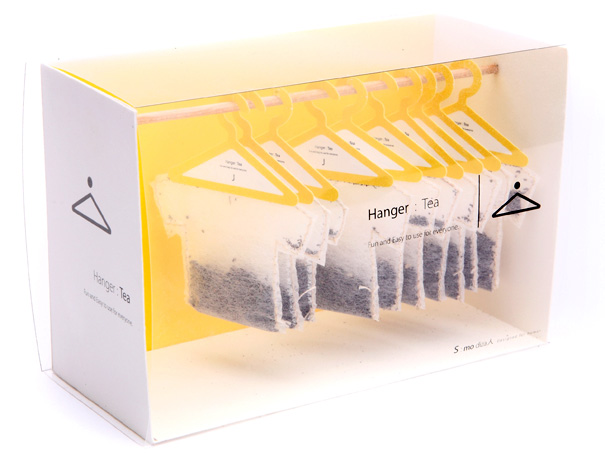
Hang me some tea by Soon Mo Kang.

Hang me some tea by Soon Mo Kang. I was surprised to find out these designs were done by a student, this made me realize the things I could be doing and how broadly I should be thinking. 


Dada


Bullet Points on Dadaism.
Neo – Dada late 20th century.
Montage and photomontage as a technique.

Dada revolt against the culture and values, which believed caused and supported the carriage of ww1 (1914 – 1918).

Anti-war.
Big in Berlin.

Art Critic, 1919 – 1920.

Hausmann and Hoch.

(Find quote from 1958 from Hausmann).

John Heartfield free text by pouring wet plaster around the type. Ready for print.

-       Traditional print fixed frame work – they changed this, by using plaster and bending the frame work, so they could put type any where on the page (we take this for advantage these days).

The two experimented with cut up pieces of newspaper and photos.

-       Millian stand behind me. 1932.

Adolf the superman : swallows god and spat and junk.

Hoch, early feminist.

      -Point out the faults of beauty culture.
-       Work from 1926 to 1935 often showed some same sex couples.

Kurt Schwitters.

1918 applied to join Berlin Dadaist’s, but was rebuffed for his un-political attitude.
Opened his own branch of Dada, with own series..

Merzbild, Kurt Schwitters. More commercial than the others.

Dada Journal 1923 to 1932 – Merz,
Mainly typography and design.

-       El Lissitzky.
-       Theo van.

Neo – Dada.

1960 – revival of Dada ideas in neo-dada. Counter cultural, born of the 60’s. Fluxus group. International group.
(John Cage).

Rauschenbergs – wanted to create form of art with instant meaning, opposing to the intellectualism of Abstract expressionism.

Images from everyday objects.
Believed that art could be made out of anything. Believed ideas behind a work of art was more important than the work.

Punk – movement. Late 70’s mid 80’s.
Partly driven by economics and social disruptions. Like dada, anti – establishments, anti –art.

Present day. Nothird runaway, searching for evidents.

Co.Kerky.


Website – shredder. Info becomes graphics/text.

Present day – Benjamin Herie? Anti Iraq war.
-       Essence of John Heartfield.
-       Influence from dada.

Dada news feed takes lines from news and assembles a montage of text and image.

-Influence on graphics.
-Aesthetics and ideas re-occur during periods of fraction and frictions.

Wordle. Google terms to related to dada to research the subject.

Put key terms into wordle, it will make up a word cloud for you. You can edit text and colour.

Key words.

John Heartfield.
Hoch,
Photomontage.
Cutouts.
Montage.
Graphics.
Typography abstractions.
Anti-establishment.
Creators of Chance.
Western culture.
Political.
Anarchic revolt.
Zurich.
Switzerland.
Fluxus group.
Duchamp.

Task.

Make a poster from 'Frost' in the style of Dada.


Essay Title change...

The essay title has been changed.


Instead of saying 'Visual culture' it now says 'how do new technologies enhance your understanding of graphic design and how do they relate to your own contemporary practice?'

How will this affect my research?

Could I still continue looking down the collage route?  Only way to know if to continue research and see what technologies helped create some of those art pieces and gave them something that they didn't have before that bit of technology.


Essay Plan

What is Visual Culture?

'Visual Culture as an academic subject is a field of study that generally includes some combination of cultural studiesart history, critical theory, philosophy, and anthropology, by focusing on aspects of culture that rely on visual images.' 


http://en.wikipedia.org/wiki/Visual_culture


Mind map of designers who have influenced me/breaking down the title. 

Exploring some of the influences further.

Robert Rauschenberg.

Robert Rauschenberg (October 22, 1925 – May 12, 2008) was an American artist who came to prominence in the 1950s transition from Abstract Expressionism to Pop Art. Rauschenberg is well-known for his "Combines" of the 1950s, in which non-traditional materials and objects were employed in innovative combinations. Rauschenberg was both a painter and a sculptor and the Combines are a combination of both, but he also worked with photography, printmaking, papermaking, and performance. He was awarded the National Medal of Arts in 1993.
Rauschenberg lived and worked in New York City as well as on Captiva Island, Florida until his death from heart failure on May 12, 2008.


Richard Hamilton.

Richard Hamilton, CH (born 24 February 1922) is an English painter and collage artist. His 1956 collage titled Just What Is It that Makes Today's Homes So Different, So Appealing?, produced for the This Is Tomorrow exhibition of the Independent Group in London, is considered by critics and historians to be one of the early works of Pop Art.

http://en.wikipedia.org/wiki/Richard_Hamilton_(artist)

Collage.

A collage (From the French: coller, to glue) is a work of formal art, primarily in the visual arts, made from an assemblage of different forms, thus creating a new whole.
A collage may include newspaper clippings, ribbons, bits of colored or hand-made papers, portions of other artwork, photographs and other found objects, glued to a piece of paper or canvas. The origins of collage can be traced back hundreds of years, but this technique made a dramatic reappearance in the early 20th century as an art form of novelty.
The term collage derives from the French "coller" meaning "glue". This term was coined by both Georges Braque and Pablo Picasso in the beginning of the 20th century when collage became a distinctive part of modern art.


Essay Title

Graphic Design in Context.

Assignment 1.